


Berlin Ancestry Tours: Tracing Your Family’s German Roots
Berlin ancestry tours usually begin with fragments. A name on a ship manifest. An address on the back of a photograph. A story a grandparent told once and never told again.
Standing on the street those fragments describe can offer a different kind of understanding than reading about them at home. The building may be gone. The street may have had three former names. What matters is that you are there, with someone who can explain what happened to the place and the people in it.
This guide covers how a Berlin ancestry tour works, what to gather before you travel, which locations matter, and what a day like this can realistically achieve.
What a Berlin ancestry tour involves
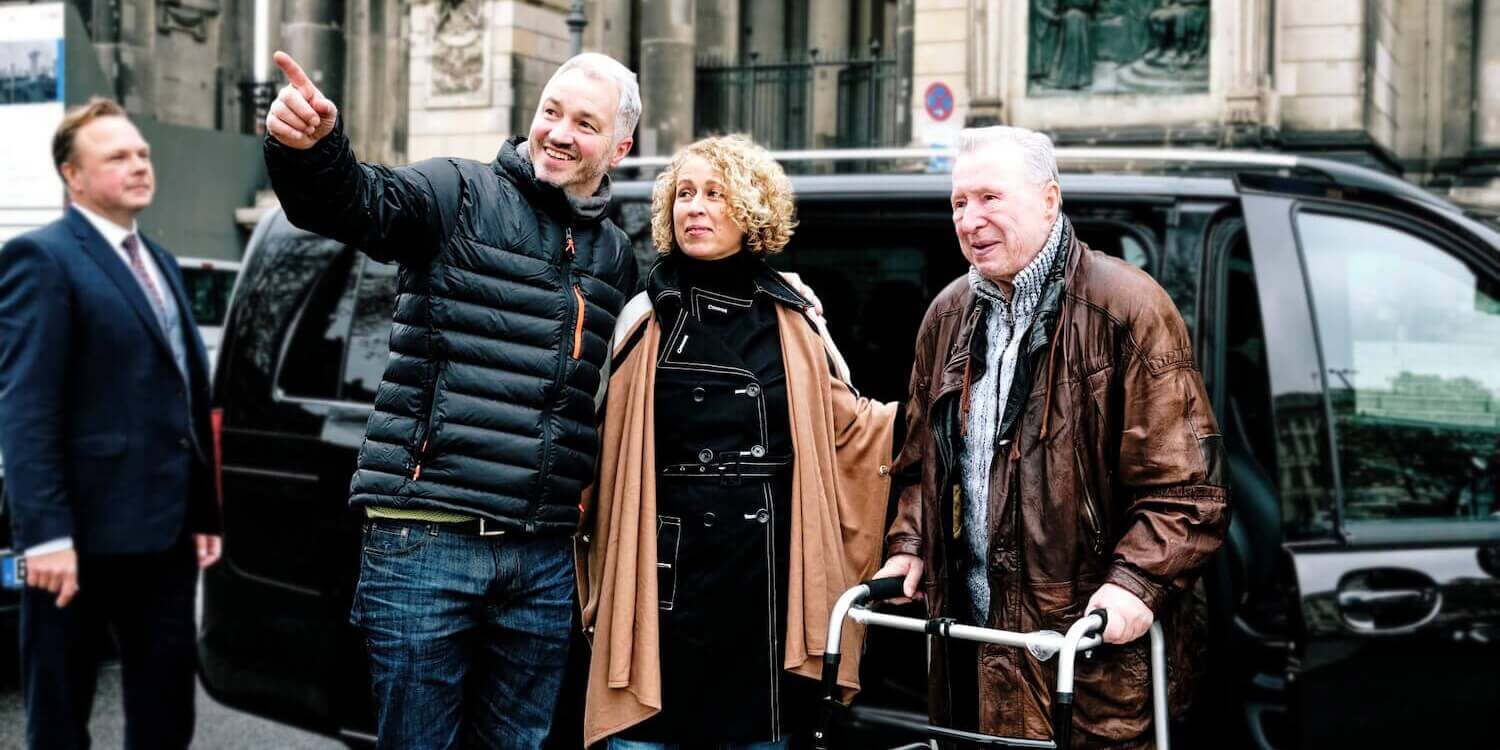
This is a private day built around one family rather than a fixed sightseeing route. No group, no set list of stops.
The material you send in advance provides the starting point for a possible route. Part of the day goes to the streets where your relatives lived, worked, worshipped or went to school. Part of it goes to context, because an address means little without the years around it. A courtyard tenement in Prenzlauer Berg tells one story in 1912 and a very different one in 1943.
The pace and emphasis can be adapted to your interests and mobility. Booking works like our other private tours, with the experience planned around your family rather than chosen from a fixed list.
Who Berlin ancestry tours suit
These days work best for travelers with something to start from: a Berlin address, even an approximate one; family names with dates or rough decades; German certificates and letters you cannot read; Ancestry, MyHeritage or FamilySearch results you have not been able to place on a map; or a known event such as emigration in the 1880s, flight in the 1930s, or separation by the Wall.
Multi-generational groups often book this day together. Grandparents supply the memory, adult children supply the research, and younger family members hear the story properly for the first time.
If you have no names or records yet, a tour may not be the best starting point. Begin with family-history research, or consider a general Berlin history tour while you gather more information.
What to send before you arrive
Preparation has a major influence on how useful the day can be. The more information you can share, the easier it is to assess what a meaningful route might include.
Documents worth gathering
Send scans or clear photographs of anything you hold: birth, marriage and death certificates, naturalization papers, passenger lists, military records, old letters and envelopes with addresses, photographs with writing on the back. Include the family names in every spelling you have seen, including the ones that look like errors. Record spellings may vary because of handwriting, transcription, translation or later name changes. Add a short summary of what you believe to be true, and mark what you are unsure about.
Free sources you can search from home
Even a small amount of research before you travel can be useful.
Landesarchiv Berlin holds Berlin registry office records from 1874 onward. Some have been digitized and indexed by Ancestry, a paid service: births through 1899 and marriages and deaths through 1920. The archive also holds the historical Berlin residents’ registration card index.
Berlin address and telephone directories covering 1707 to the early 1990s are free to browse on the Zentral- und Landesbibliothek’s digital portal. With a surname and a rough decade you can often find the street, the house number, and sometimes the occupation.
Arolsen Archives hold records on victims of Nazi persecution, with a free online search.
Even a partial result changes the day. An address book entry showing your great-grandfather as a tailor at a Wedding address in 1928 gives a guide something to build a morning around.
If you have almost nothing, say so when you enquire. Better to plan a day that is honest about the gaps than to arrive expecting a discovery the material cannot support.
How a personalized itinerary comes together
We ask questions before proposing anything. Names, dates, districts, what you hope the day will do, who is traveling, how much walking is comfortable, and whether parts of the story feel difficult.
Based on what you share, Humboldt Tours Berlin can assess what might fit into a realistic private itinerary. Distances in Berlin are large, so the plan has to be realistic about how many locations fit into a day. Two neighborhoods and a memorial site, done properly, beat six addresses through a car window.
This is arranged as a tailor-made tour. Contact us as early as possible so there is time to assess the material and any practical requirements.
Places that tend to matter
The address itself
Many Berlin addresses have changed. Streets were renamed under the Nazis, again in the GDR, and again after 1990. Buildings were destroyed in the war and replaced. House numbering was revised. Boundaries moved twice on a large scale: when Greater Berlin absorbed the surrounding towns in 1920, and when the districts merged into twelve in 2001.
Standing at the site still matters when the building has gone. The surrounding streets, local church or nearby station can still help place the address in its historical setting.
Neighborhoods and daily life
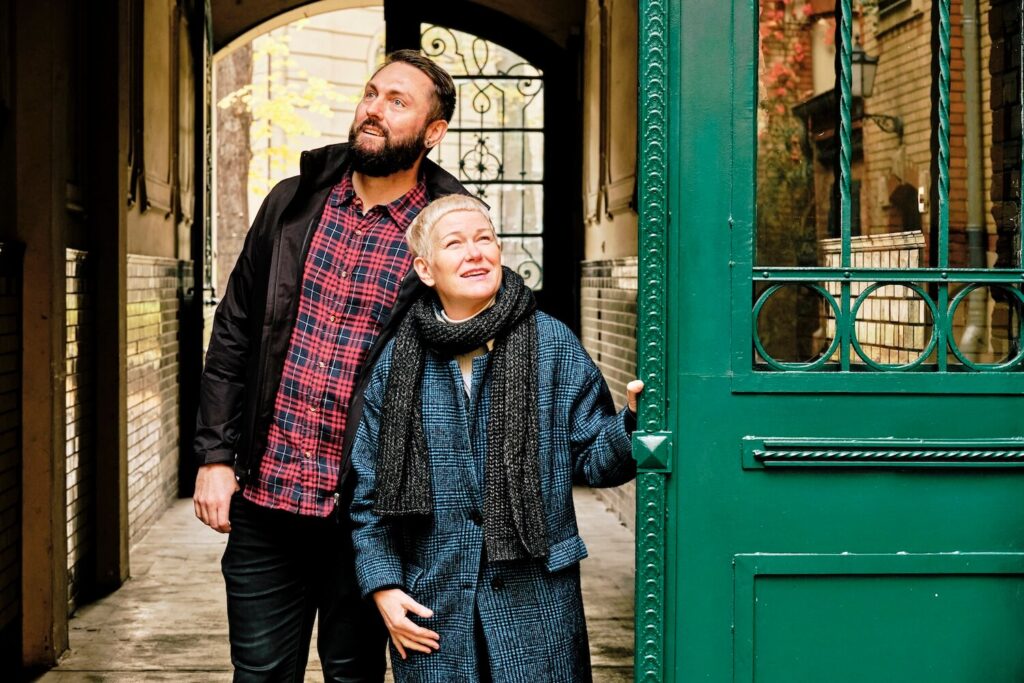
Berlin’s neighborhoods developed distinct social, religious and economic histories. Wedding and Friedrichshain were strongly associated with working-class life, while Charlottenburg included wealthier residential areas. Jewish life was never confined to one district, although the Scheunenviertel and parts of Prenzlauer Berg remain important to many family stories. Local context can help explain the pressures and possibilities your relatives faced.
Memorial and record sites
Depending on the story, a route might include Stolpersteine set into the pavement outside a last freely chosen address, the deportation memorial at Track 17 in Grunewald, the Jewish cemetery in Weißensee, or the Berlin Wall Memorial on Bernauer Straße.
The wider historical picture
Context is often the part guests remember. Why Berlin’s population grew so fast between 1870 and 1920. What emigration required in 1890 compared with 1938. What happened to families split between East and West after 1961. A knowledgeable guide can connect these larger events with the streets and districts you visit.
What one guest experienced
A guest who came to trace his mother’s early life left this review on Tripadvisor:
“I wanted to find out about the Berlin my mother grew up in, from 1930 to 1947. I sent Humboldt the few details I had found on Ancestry.com and that my mother had told me about. My guide was Nadin. She arrived punctually and was carrying a folder of 25 pages she had photocopied from a number of sources, such as the city directory, press clippings, personal memoirs and photographs of places in the first half of the 20th century. We then took a six-hour tour of the neighborhoods in Friedrichshain and Karlshorst… She is an accomplished historian by training, so she can provide as much context and color as you need. It was such a pleasure to accompany her and I cannot recommend her highly enough.”
Note what made that day work. He sent his material ahead, and his guide had time to prepare with it.
What Berlin ancestry tours can and cannot do
Humboldt Tours Berlin is a private tour operator, not a genealogical research agency. Saying so at the start prevents disappointment later.
We can plan a private day around the material you provide, explain relevant historical context, and take you to accessible addresses and public sites. The exact scope depends on the information available and the guide assigned.
We cannot guarantee that a specific record exists or will be found, bypass archive access rules, enter private buildings without permission, locate living relatives, or promise that a particular building still stands.
Those limits make careful planning more important. The purpose is to understand what Berlin can still show you, without promising a discovery that may not be possible.
Enquiring about a family history day in Berlin
If you have a Berlin connection you would like to follow, write to us with what you have. Names, dates, addresses, documents, and the parts you are unsure about. We will tell you honestly what a day could cover and what it probably cannot. Send your details through our contact page. The earlier you write, the more preparation is possible.

Frequently asked questions about Berlin ancestry tours
As early as you reasonably can. Preparation and archival enquiries can take time. If your trip is close, contact us anyway and we will explain what may be achievable.
Yes. Clear scans can help identify useful names, dates and addresses. Older handwritten records may use Kurrent or Sütterlin, which require specialist reading skills. Send them with your enquiry so Humboldt Tours Berlin can confirm what can realistically be used.
Tell us the place name. Berlin absorbed dozens of surrounding towns and villages in 1920, so somewhere that sounds like a separate town may now be a Berlin district. Places farther out in Brandenburg are a different question, and we will explain whether we may be able to help.
It can be, with careful planning. Tell us their ages and how much of the family story they already know. Sites connected to persecution and deportation need particular thought, and the length of the day matters more when children are involved.
The building may be gone or the records may be incomplete. The surrounding street, neighborhood and historical context can still reveal a great deal about the life your family may have known.
It may be possible. One option is a family-history morning followed by a broader Berlin history tour, or a dedicated ancestry day within a longer stay. Ask about the most practical format when you enquire.