

What Makes Berlin Unique? Why the City Feels Different
What makes Berlin unique is that its history is still visible in the way the city works today. Berlin was divided for decades, so it has two of many things and no single center. Its neighborhoods feel like separate small towns. Old airports, power stations and breweries have been given new lives. Memorials sit in ordinary streets rather than only in museums. And a large international population shapes what you eat, hear and see. Other great cities have their own layers, but in Berlin the joins between them are unusually easy to spot.
This guide is about how Berlin feels to a visitor today. If you want the deeper story of how the city’s culture developed, period by period, read our guide to Berlin culture through the years.
What makes Berlin different from other cities?
Every major city changes over time. What sets Berlin apart is how recently, how often and how visibly it has changed. In the twentieth century alone, it was an imperial capital, the capital of a fragile democracy, the center of a dictatorship, a bombed-out city occupied by four powers, and then two cities facing each other across a wall. Since 1990, it has been rebuilt as the capital of a reunified Germany.
As early as 1910, the critic Karl Scheffler wrote that Berlin was condemned “forever to become and never to be.” More than a century later, many visitors still recognize that description. Rather than trying to sum Berlin up in one image, it helps to look for a handful of features that you will notice again and again as you move around the city.
History you can still see in everyday streets
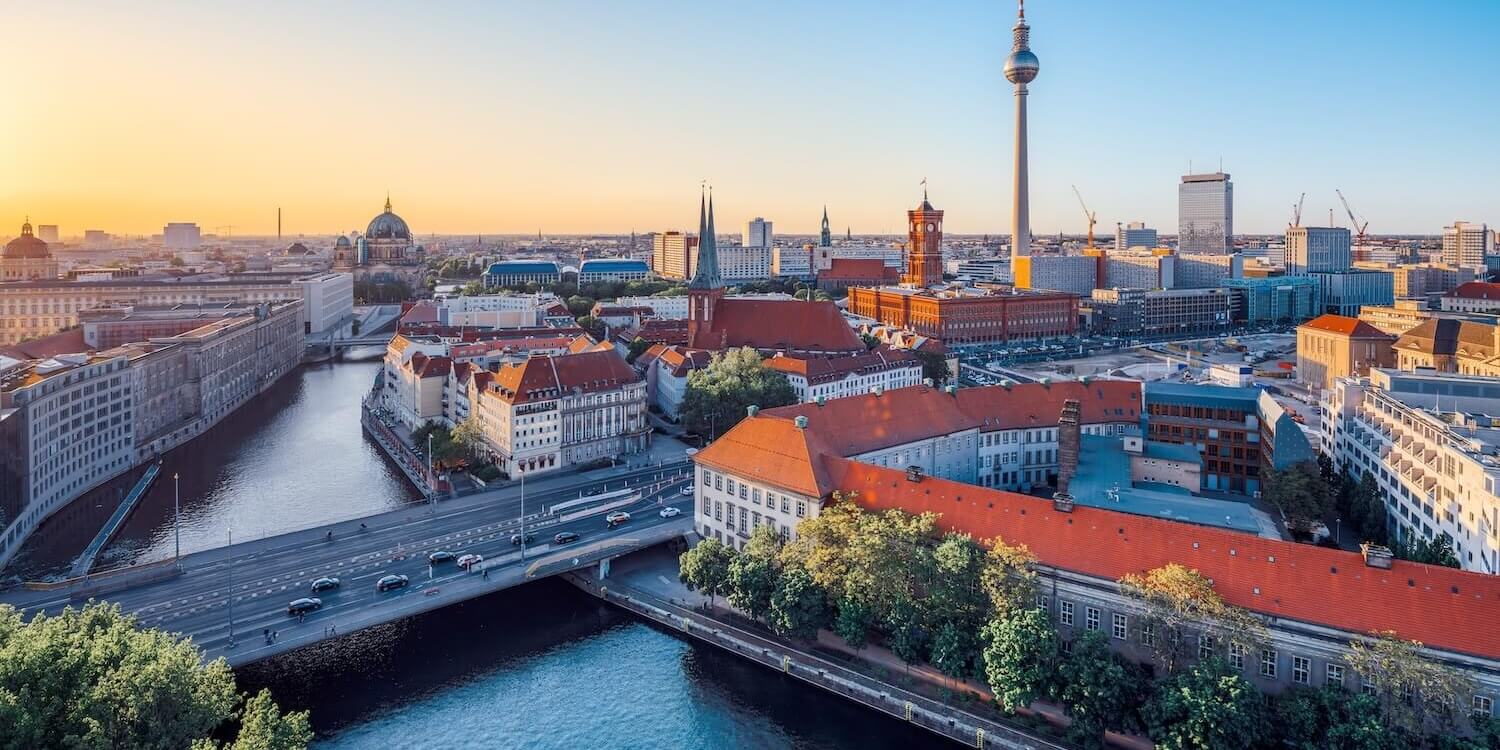
In many European capitals, the historic center forms a single, harmonious picture. Berlin looks more like a collage. On one walk you can pass a Prussian palace, a 1950s Socialist boulevard, a glass government building and a gap where a building was never replaced after the war. Some facades still carry bullet and shrapnel marks from 1945.
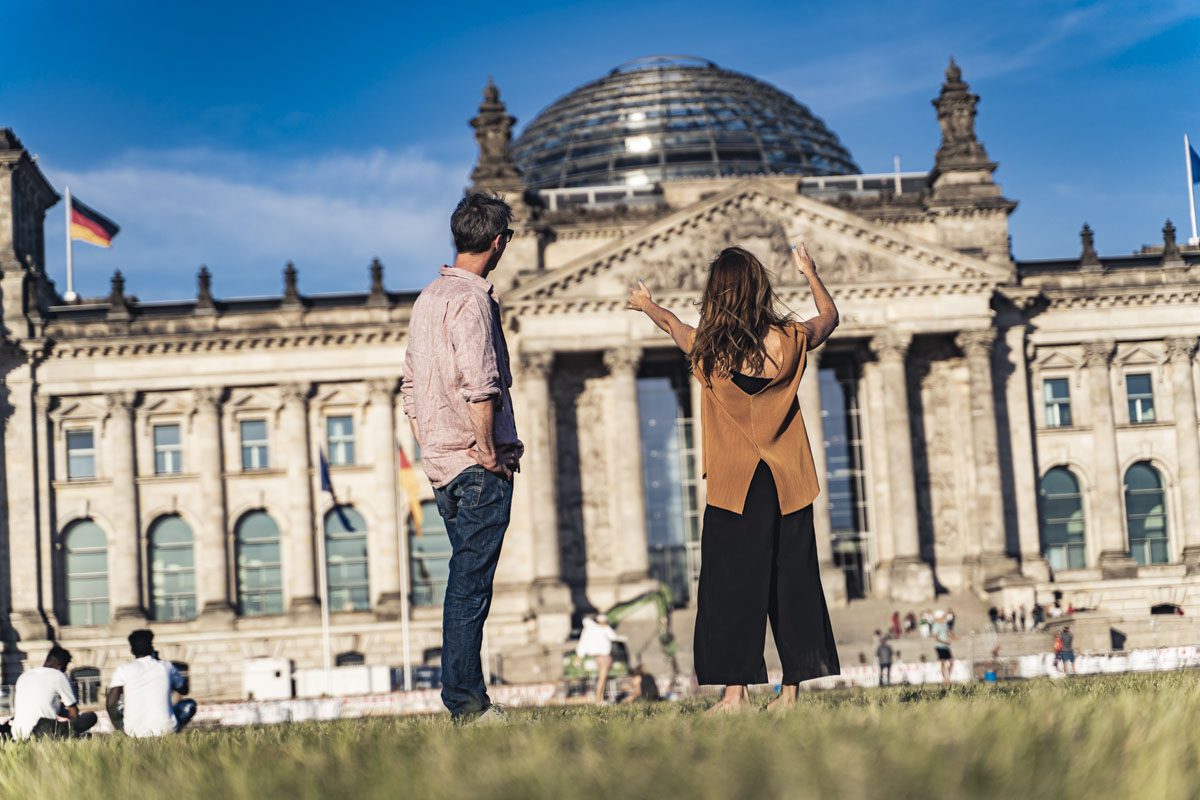
The Brandenburg Gate shows how a single landmark can carry very different meanings. It was built between 1788 and 1791 for King Frederick William II of Prussia as a gateway to the royal boulevard Unter den Linden. Napoleon carried off its Quadriga sculpture to Paris in 1806, and it was returned in 1814. On the night Hitler became chancellor in 1933, the Nazis staged a torchlight parade through the gate. From 1961 it stood inaccessible beside the Wall, and in December 1989 it was officially reopened in front of a huge crowd, becoming a symbol of reunification. Our guide to famous buildings in Berlin explains the stories behind the city’s major landmarks.
One city shaped by two different systems
During the Cold War, and especially after the two German states were founded in 1949, East and West Berlin were shaped by different political systems, with different economies, governments and ideas of what a city should be. Each half needed its own institutions, and many of them still exist. That is why Berlin has two zoos: the Berlin Zoo, founded in 1844 in what became West Berlin, and the Tierpark, opened in East Berlin in 1955. It has a broadcasting tower from the 1920s in the West and the much taller TV Tower from 1969 at Alexanderplatz in the East. The State Library has two major buildings, and the city has two historic centers of shopping and nightlife: the area around Kurfürstendamm in the West and Alexanderplatz and Friedrichstrasse in the East.
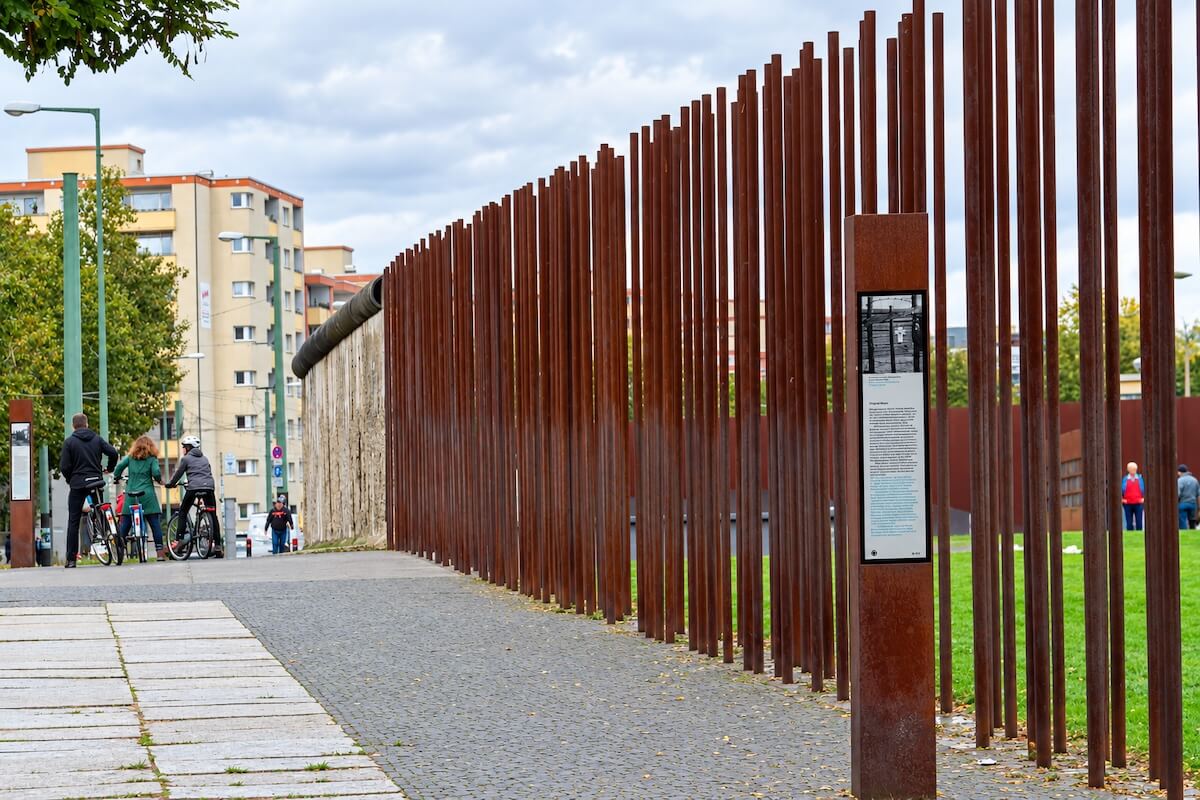
You can still see the difference in the streetscape. Look for the wide boulevards and prefabricated apartment blocks typical of East Berlin, or the different street lamps on either side of the former border. The route of the Wall is marked through the city center by a double row of cobblestones. The best place to understand how the border worked is the Berlin Wall Memorial on Bernauer Strasse, run by the Berlin Wall Foundation.
A city of neighborhoods rather than one center
Modern Berlin was created in 1920, when the Greater Berlin Act merged the city with eight towns, 59 rural communities and 27 estates. Places such as Charlottenburg, Spandau, Schöneberg and Köpenick had their own town halls, high streets and identities before they became part of Berlin, and many still feel that way.
Within those districts, Berliners talk about their Kiez: the few streets around a square, market or subway station where they shop, meet friends and go out. Each Kiez has its own pace, cafés and weekly rhythm. For visitors, this means Berlin rewards slowing down in one area rather than trying to find a single “real” center. Our guide to the best neighborhoods in Berlin explains how the main districts differ and which suit different kinds of trips.
How Berlin reuses buildings and public spaces
Because so much of the city was damaged, divided or left without its original purpose, Berlin has a long habit of giving old structures new uses. A few examples you can visit today:
- Tempelhofer Feld: Flights at Tempelhof Airport ended in 2008, and since 2010 its runways have been a public park of about 355 hectares (roughly 880 acres). In a 2014 referendum, Berliners voted to keep the field free from development.
- Kraftwerk Berlin: A heating and power plant built in the 1960s to supply East Berlin is now an event and exhibition space, and it is home to the techno club Tresor.
- Hamburger Bahnhof: One of Berlin’s earliest railway stations is now the National Gallery of Contemporary Art.
- Kulturbrauerei: A former brewery complex in Prenzlauer Berg now houses cinemas, event venues and a museum about everyday life in East Germany.
- Markthalle Neun: A nineteenth-century market hall in Kreuzberg has become a center for regional food and street-food events.
- Badeschiff: In summer, a converted barge on the Spree serves as an outdoor swimming pool.
After reunification, the availability of empty buildings and inexpensive space drew artists, musicians and club organizers from around the world. That was a specific period. Today, Berlin’s housing market is tight and rents have risen sharply, and the loss of affordable studios, project spaces and venues is a recurring public debate.
Memorial culture in everyday streets
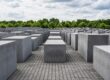
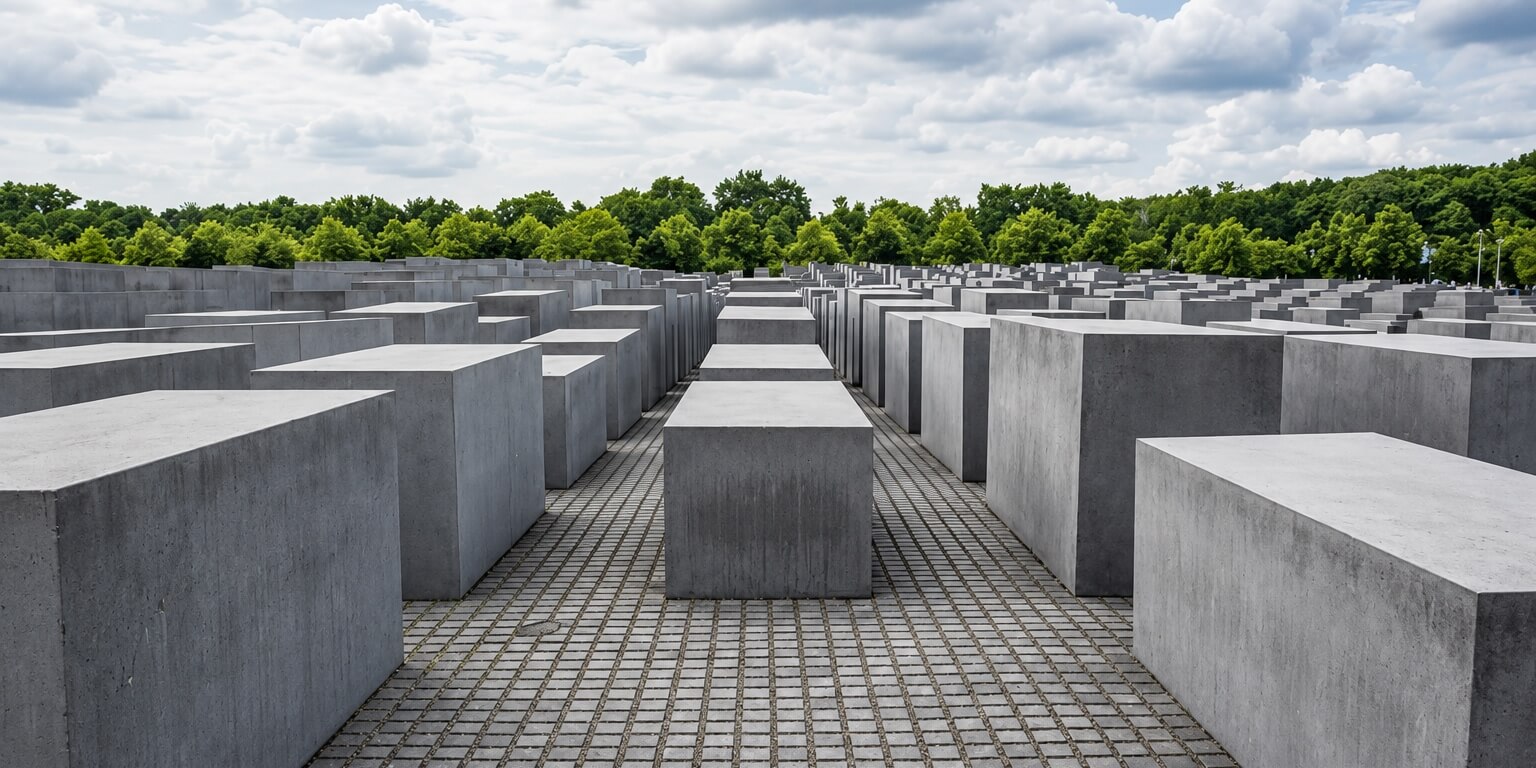
Berlin confronts its darkest history in unusually direct ways. The Memorial to the Murdered Jews of Europe occupies a large site near the Brandenburg Gate. The Topography of Terror documentation center stands on the site of the former Gestapo and SS headquarters. On Bebelplatz, a window in the pavement looks down into an empty library marking the Nazi book burning of 1933.
Some of the most powerful memorials are small. Thousands of Stolpersteine, brass plaques set into the sidewalk, record the names of individual people who lived in a building before they were deported, murdered or forced to flee. You will come across them in front of ordinary apartment buildings across the city. Our guides to Jewish Berlin and World War II sites in Berlin explain where and how to visit these places with the care they deserve.
Culture beyond museums
Berlin has around 170 museums, according to visitBerlin, and three major opera companies: the Staatsoper Unter den Linden, the Deutsche Oper Berlin and the Komische Oper, which has been performing at the Schiller Theater while its home on Behrenstrasse is renovated. The Berlin Philharmonic and several other leading orchestras add to a remarkably dense concentration of publicly funded culture, partly because both halves of the divided city built up their own institutions.
Alongside them is a large independent scene of galleries, project spaces, small theaters, bars and clubs. In 2024, techno culture in Berlin was added to Germany’s national inventory of intangible cultural heritage. For visitors, the contrast is part of the experience: you can spend the afternoon at a world-class museum and the evening at a small concert in a converted courtyard. Not every venue lasts, and openings and closures are frequent, so it is worth checking listings close to your visit.
Migration and international Berlin
Berlin’s population has been shaped by newcomers for centuries, from French Protestant refugees in the seventeenth century to workers recruited from Turkey and other countries by West Germany from the 1960s, and contract workers from Vietnam and other socialist countries in East Germany. Today, newcomers from across Europe and the world continue to settle in the city.
The figures are striking. At the end of 2025, according to the Amt für Statistik Berlin-Brandenburg, Berlin had about 3.9 million registered residents; 24.9 percent held a foreign nationality, and 42.3 percent had a migration background. You notice this in the food, the languages you hear on the subway, the religious buildings, the markets and the festivals, such as the Carnival of Cultures in Kreuzberg. It is also why it makes little sense to speak of a single Berlin outlook: residents disagree about many things, including how the city should change.
Green space, water and room to breathe
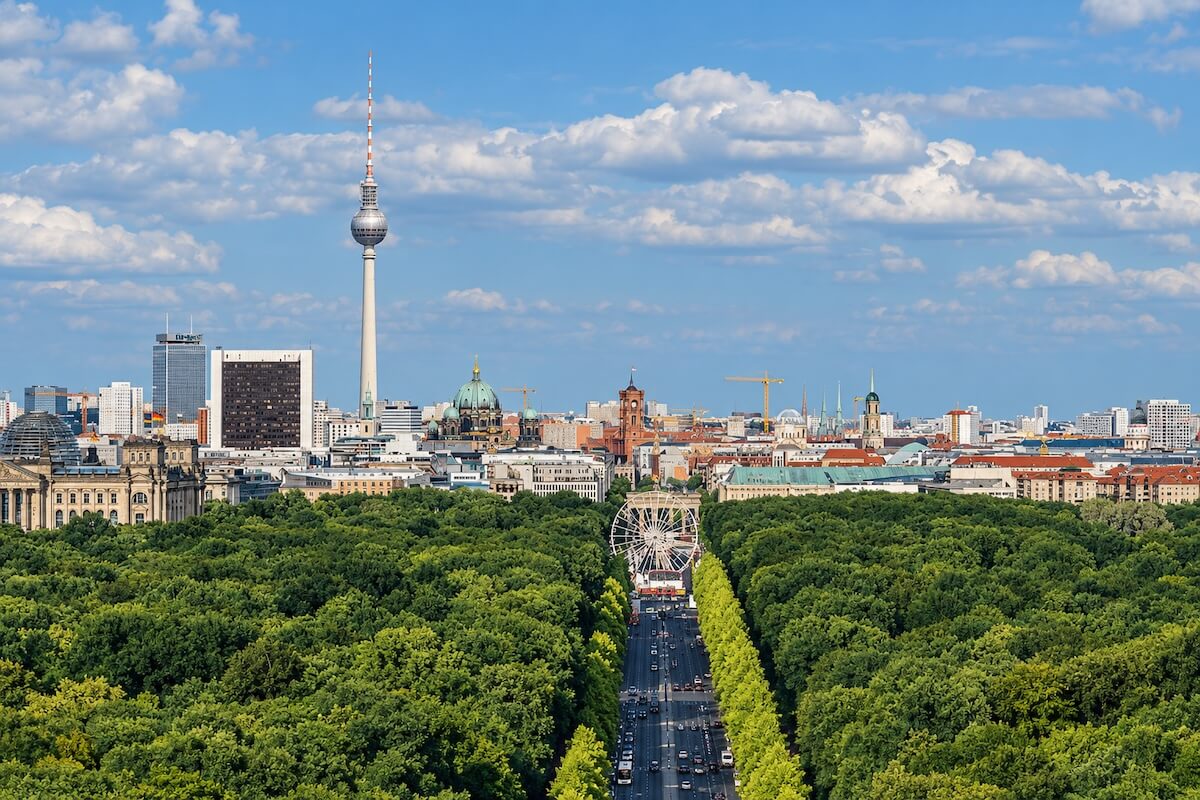
For a capital of almost four million people, Berlin can feel surprisingly spacious. The Tiergarten, a former royal hunting ground, sits in the middle of the city; the Grunewald forest and the lakes along the Havel, such as the Wannsee, lie within the city limits; and the Spree, the Landwehr Canal and many smaller waterways run through central neighborhoods. Add Tempelhofer Feld, numerous parks and the large green courtyards behind many apartment blocks, and it is easy to see why Berliners spend so much of their free time outdoors.
Why Berlin feels different from the rest of Germany
Many Germans would agree that Berlin is not typical of the country. It is one of three city-states, alongside Hamburg and Bremen. It is the national capital, but it has not dominated Germany’s economy the way Paris or London dominate theirs, and other cities such as Munich, Frankfurt and Hamburg have their own strong identities. Germany’s division took an exceptionally visible urban form here: Berlin was governed in four Allied sectors and, from 1961, a fortified wall ran through the city. Its international population, its scale and its long history of reinvention give it a character that differs from smaller, more traditional German cities.
That does not mean Berlin is more “real” or more interesting than the rest of Germany. Cities such as Potsdam, Dresden or Hamburg offer very different experiences, and many visitors combine them with Berlin.
How to experience Berlin’s character as a visitor
- Walk a former border section: Start at the Berlin Wall Memorial on Bernauer Strasse and look for the cobblestone line in the city center.
- Spend time in one Kiez: Choose a neighborhood such as Kreuzberg, Prenzlauer Berg or Schöneberg and explore it at a slower pace.
- Look down as well as up: Notice Stolpersteine, bullet-marked facades and gaps between buildings.
- Visit a reused space: Walk or cycle across Tempelhofer Feld, or eat at Markthalle Neun.
- Mix institutions and independent culture: Pair a major museum or opera with a gallery, small concert or market in the same day.
- Use the water and parks: Take a boat on the Spree or spend an afternoon at a lake.
If you only have a short time, our one-day Berlin itinerary shows how to combine the main sights with a sense of the city’s character.
Discovering Berlin’s character with a private guide
Much of what makes Berlin unique is easy to miss without context: the line of cobblestones, the name on a Stolperstein, the reason a street suddenly changes character. A private guide can point out these details and connect them to the people and events behind them.
Our architecture tour of Berlin follows the city’s contrasting styles from royal Berlin to postwar planning, and our Culture & Cuisine in Kreuzberg food tour explores how migration and local history shape one neighborhood today. You can browse our private Berlin tours, ask us to plan a tailor-made itinerary around your interests, or contact our Berlin team for advice.
Frequently asked questions about what makes Berlin different
Berlin’s history is unusually visible in its streets, from Prussian monuments and Cold War traces to memorials in front of ordinary homes. Decades of division left it with duplicated institutions and several centers, and its neighborhoods, reused buildings, international population and independent culture give it a distinct character.
Berlin is a city-state and the national capital, and Germany’s division took an exceptionally visible urban form here, with four Allied sectors and, from 1961, a fortified wall running through the city. Its large international population and repeated reinvention over the past century have also given it a less uniform character than many other German cities.
Yes, in specific ways. Unlike Paris or London, Berlin has no single historic center, its division left two sets of many institutions, and its recent history is presented openly through memorials in public space. Like other capitals, it also has major museums, government districts and busy tourist areas.
Berlin was formed from many separate towns in 1920, and during division East and West Berlin each developed their own centers. That is why Mitte, the area around Kurfürstendamm and several district centers all feel like hubs.
The two halves were rebuilt after the war under different political systems. East Berlin has more socialist-era boulevards and prefabricated housing, while West Berlin has more postwar Western architecture and older districts that were not cleared. Some details, such as the style of street lamps, still differ in many places.
For residents, much less than it used to be. Rents have risen sharply over the past decade, and the housing market remains tight. Visitor costs vary widely by season and neighborhood, so check current accommodation, transport and attraction prices rather than relying on Berlin’s old low-cost reputation.
After reunification, empty buildings and inexpensive space attracted artists, musicians and club organizers, building on earlier alternative scenes in West Berlin and the unofficial art scene in East Berlin. Much of that culture continues, though rising costs have made it harder to sustain.