

Famous Buildings in Berlin: From Prussian Palaces to the TV Tower
The most famous buildings in Berlin are the Brandenburg Gate, the Reichstag building with its glass dome, Berlin Cathedral and the museums of Museum Island, and the TV Tower at Alexanderplatz. Add the Kaiser Wilhelm Memorial Church, the Neue Nationalgalerie, the Jewish Museum Berlin, the reconstructed Berlin Palace (now the Humboldt Forum) and Charlottenburg Palace, and you have three centuries of German history in stone, steel and glass.
This guide takes them in historical order, from the Prussian kings to reunification, so you can see how each building answered the politics of its time. For every one, you will find who designed it, where it is, whether you can go inside and what you need to book. Visitor details were checked in October 2026; opening hours and closures change, so confirm on the official website before you go.
Berlin’s famous buildings at a glance
- Brandenburg Gate (1791), Pariser Platz, Mitte: a monument you walk through; free, no booking
- Museum Island (1824–1930), Mitte: an ensemble of five museums; ticketed, most closed on Mondays
- Charlottenburg Palace (c. 1700), Charlottenburg: royal palace and gardens; ticketed, closed on Mondays
- Reichstag building (1894; rebuilt 1999), Tiergarten: parliament; dome free with advance registration
- Berlin Cathedral (1905), Museum Island: Protestant cathedral; ticketed outside services
- Kaiser Wilhelm Memorial Church (1895 and 1961), Breitscheidplatz: war ruin and modern church; a place of worship
- Neue Nationalgalerie (1968), Kulturforum: museum of modern art; ticketed, closed on Mondays
- Berlin TV Tower (1969), Alexanderplatz: observation deck; time-slot tickets
- Jewish Museum Berlin (2001), Kreuzberg: museum in the Libeskind building; closed on Mondays
- Humboldt Forum (2020), Schlossplatz: reconstructed palace and cultural center; exhibitions closed on Tuesdays
Prussian Berlin: the royal city (1700s–1800s)
In the eighteenth and nineteenth centuries the kings of Prussia turned a modest residence town into a capital, laying out Unter den Linden as a grand boulevard and borrowing their architecture from ancient Greece and Rome. The Brandenburg Gate and Museum Island are the clearest results. If you want the wider background first, our guide to Berlin’s culture through the years traces how each era shaped the city.
Brandenburg Gate
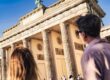
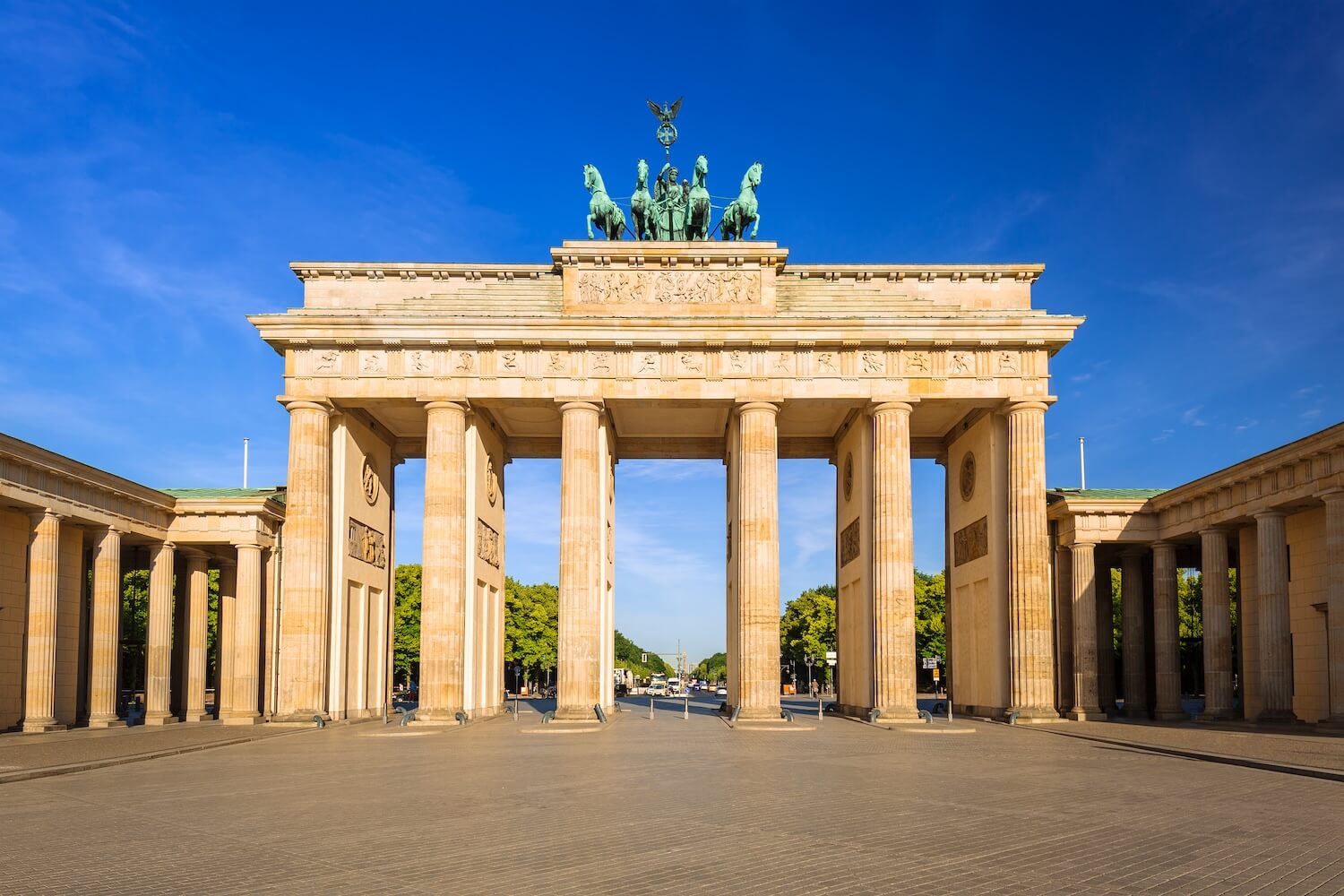
King Frederick William II commissioned the gate as a ceremonial end to Unter den Linden. Carl Gotthard Langhans designed it, drawing on the Propylaea, the monumental gateway to the Acropolis in Athens, and it was built between 1788 and 1791 as Berlin’s first Greek Revival building. Johann Gottfried Schadow’s Quadriga, a chariot drawn by four horses, was placed on top in 1793. Napoleon took it to Paris in 1806; it came back in 1814.
The gate’s later history matters as much as its design. When the Wall went up in 1961 it stood in the restricted border zone, out of reach for East and West Berliners alike, and it was reopened to cheering crowds on December 22, 1989. Today it stands on Pariser Platz and is open to everyone at all hours.
Museum Island
Museum Island is an ensemble rather than a single building: five museums built between 1824 and 1930 on the northern tip of an island in the Spree, listed together as a UNESCO World Heritage Site since 1999. Karl Friedrich Schinkel’s Altes Museum, opened in 1830 with its long colonnade facing the Lustgarten, set the tone. The Neues Museum, left in ruins after the war, was rebuilt by David Chipperfield and reopened in 2009; it is home to the bust of Nefertiti.
You can walk around the island freely. The museums are ticketed and generally closed on Mondays, and the State Museums recommend booking online. The Pergamonmuseum has been closed for renovation since October 2023 and is scheduled to begin reopening in 2027.
Charlottenburg Palace
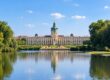
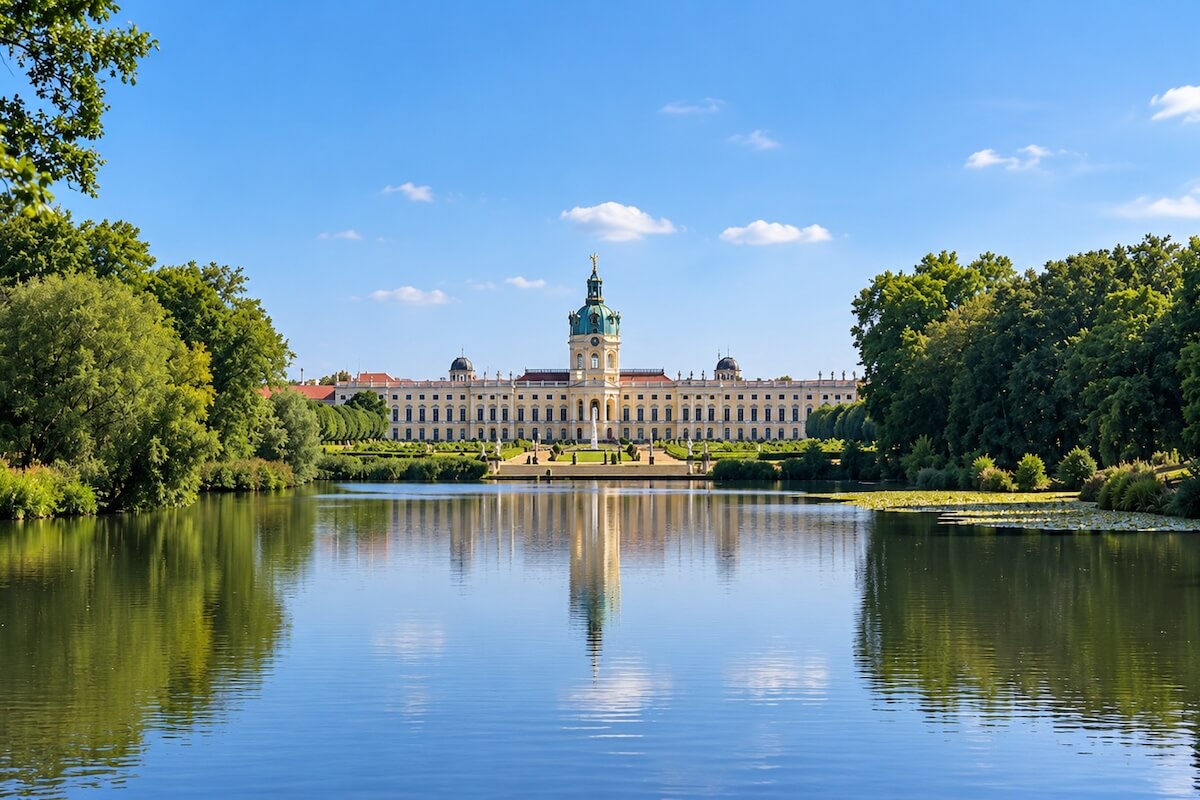
Charlottenburg Palace began as a summer residence for Sophie Charlotte, wife of the elector who in 1701 crowned himself King Frederick I in Prussia. The baroque Old Palace, with its crowning tower, was built around 1700, and later rulers extended it into a long complex with formal gardens behind. The palace was severely damaged in the Second World War and largely rebuilt and refurnished afterward; the Porcelain Cabinet and the palace chapel are among the highlights inside.
It sits in the western district of Charlottenburg, about 30 minutes from Mitte by public transport. The Old Palace is open from Tuesday to Sunday and closed on Mondays, with seasonal hours.
Imperial Berlin: capital of the German Empire (1871–1918)
After German unification in 1871, Berlin became an imperial capital and built on a scale to match. The buildings of this period are larger, heavier and more ornate, and two of the three in this section were badly damaged in the Second World War, which is part of why they look the way they do today.
Reichstag building
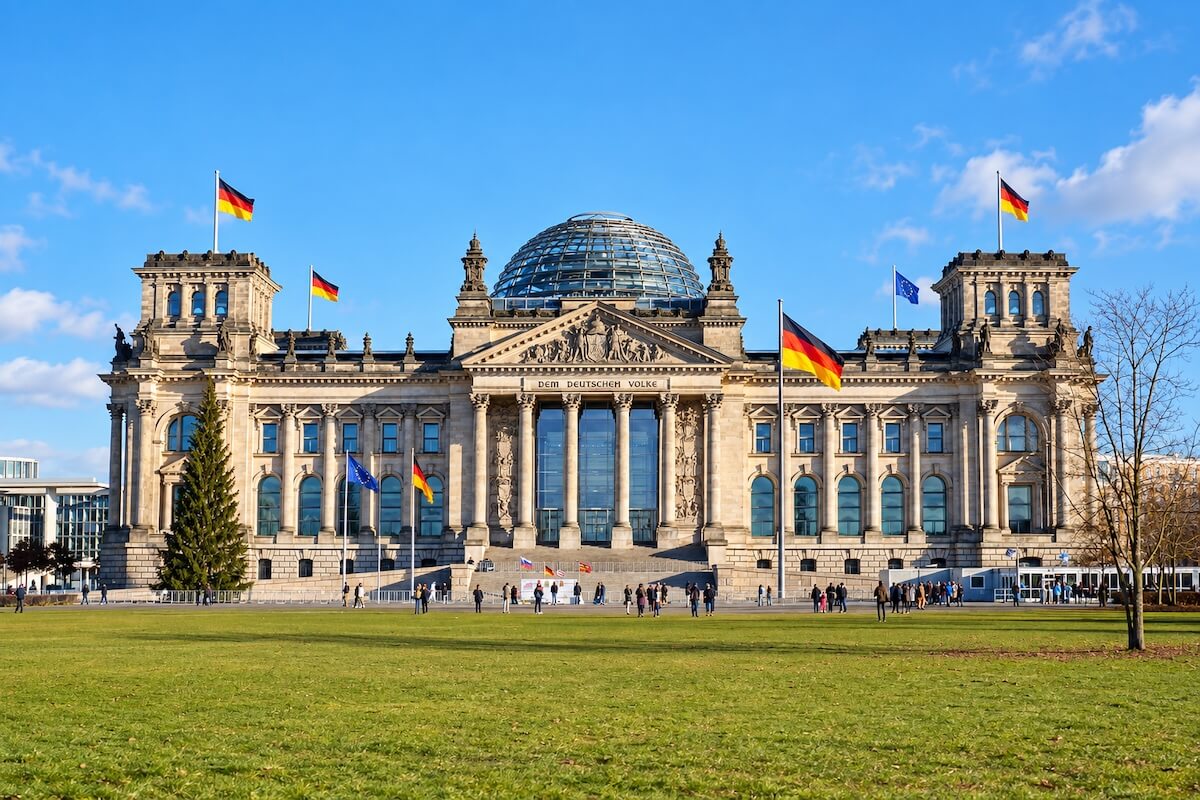
No building in Berlin has had a more dramatic life. Paul Wallot won the design competition in 1882, the foundation stone was laid in 1884 and the building was completed on December 5, 1894. The inscription Dem Deutschen Volke (“To the German People”) was only added in 1916. On November 9, 1918, the Social Democrat Philipp Scheidemann proclaimed the German republic from one of its windows.
On the night of February 27, 1933, a fire destroyed the plenary chamber. The Nazis used it as a pretext to arrest opposition deputies and suspend fundamental rights, and the vote on the Enabling Act, by which parliament gave away its own powers, took place in the Kroll Opera House across the square. The building never again served as a working parliament under Nazi rule. It ended the war as a ruin; its damaged dome was blown up in the 1950s, and Paul Baumgarten converted the interior between 1961 and 1973, although after the Four Power Agreement of 1971 the Bundestag could not hold plenary sessions in Berlin.
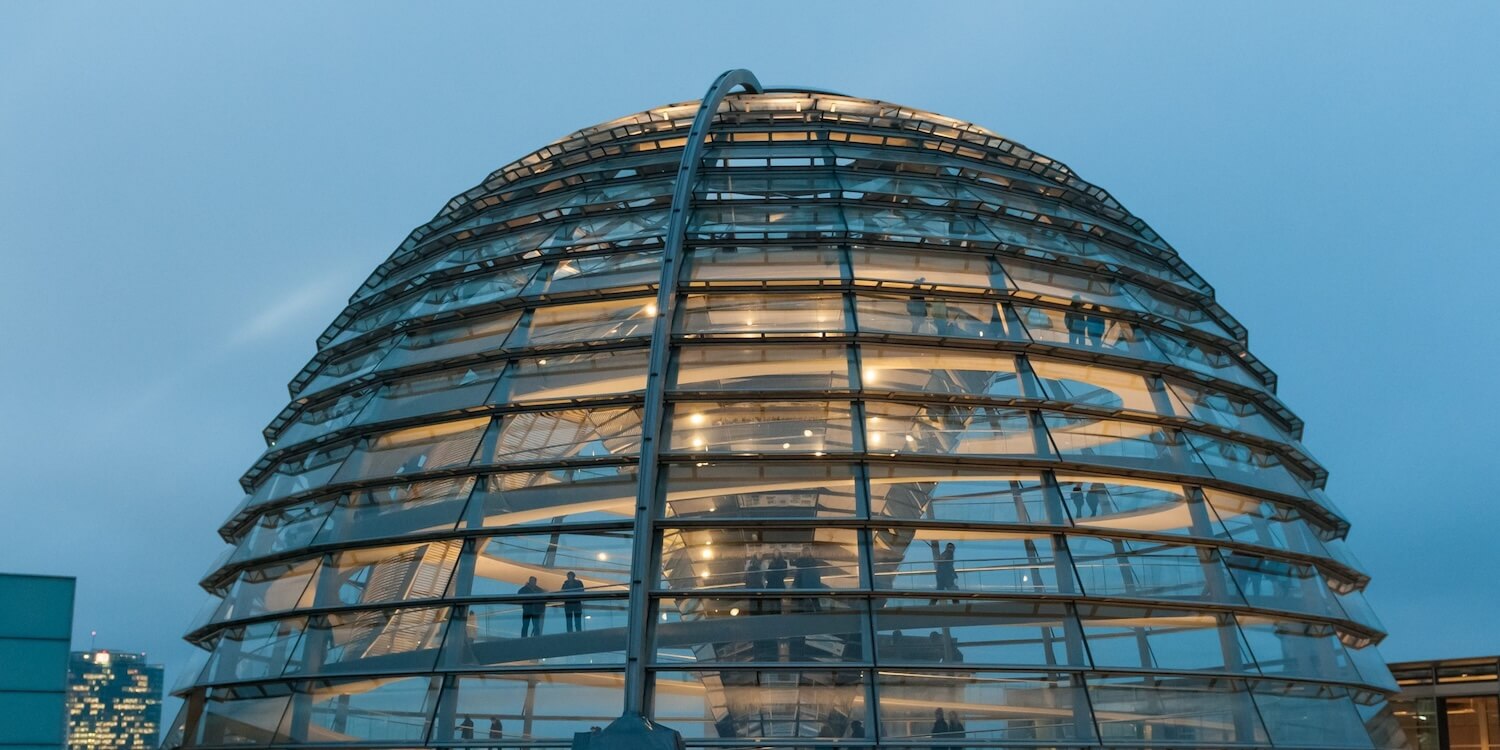
After reunification, the first all-German parliament met here on October 4, 1990, and in 1991 the Bundestag decided to move to Berlin. Norman Foster won the commission to rebuild the interior, the artists Christo and Jeanne-Claude wrapped the building in fabric in 1995 before work began, and the Bundestag opened the rebuilt Reichstag in April 1999. Foster’s glass dome, with its spiral ramps above the plenary chamber, is open to visitors.
Visiting: the dome and roof terrace are free but require advance registration with the German Bundestag, giving each visitor’s name and date of birth. Everyone must bring official photo identification, such as a passport or national identity card, and pass a security check. Same-day places are sometimes available at the Bundestag’s service point near the building.
Berlin Cathedral
The present cathedral replaced a smaller building that Schinkel had remodeled in the classical style. Once Berlin became an imperial capital, the old church was no longer thought grand enough; the architect Julius Carl Raschdorff designed its successor, the old building was torn down in 1893, and the new cathedral, with an opulent neo-Renaissance and neo-Baroque interior, was inaugurated on February 27, 1905. A bomb set the dome on fire in May 1944. East Germany allowed reconstruction to begin only in 1975, with simplified domes, and the cathedral was rededicated on June 6, 1993.
Inside, you can see the church interior, the Hohenzollern crypt, which has reopened after a long restoration, and climb to the walkway around the dome. Tickets are sold online, and the dome is not accessible to visitors with reduced mobility. The cathedral stands beside the Lustgarten on Museum Island.
Kaiser Wilhelm Memorial Church
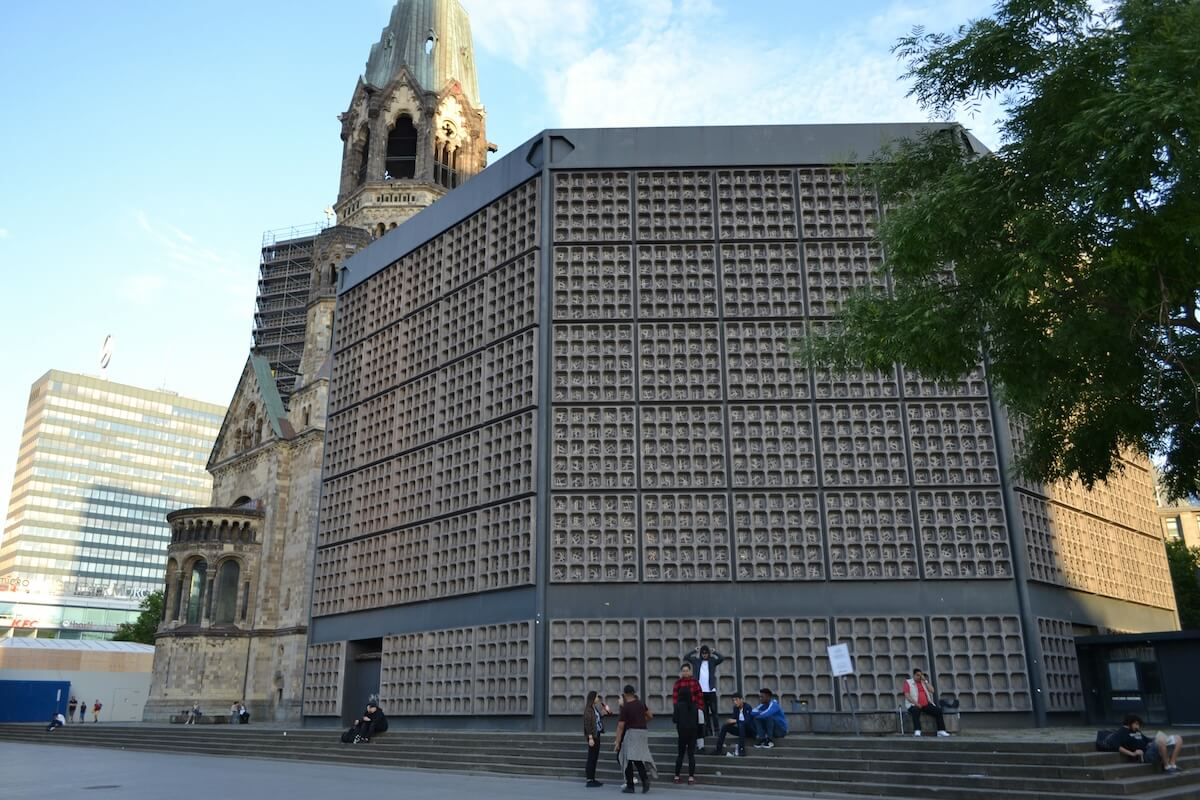
The western counterpart to the cathedral was built by Franz Schwechten in a neo-Romanesque style with Gothic elements and consecrated on September 1, 1895, in memory of Kaiser Wilhelm I. It was destroyed in an air raid in November 1943. Rather than clear the ruin, Berlin kept the broken west tower as a memorial, and it became a landmark of West Berlin.
Next to it, the architect Egon Eiermann built a new church, consecrated on December 17, 1961. Its walls are made of concrete honeycomb panels filled with colored glass, mostly blue, designed by Gabriel Loire of Chartres; from inside, the effect is of being enclosed in deep blue light. The church stands on Breitscheidplatz at the eastern end of the Kurfürstendamm. It is a working church, so check the parish website for visiting times.
Divided Berlin: modern architecture East and West (1945–1990)
With the city divided, both sides used architecture to make a point. West Berlin looked to international modernism; East Berlin built a tower that could be seen from almost anywhere in the city, including the West.
Neue Nationalgalerie
Ludwig Mies van der Rohe’s last major completed work opened on September 15, 1968. It is essentially a vast glass hall beneath a flat steel roof, which was raised into place hydraulically in 1967, with the collection galleries on a level below. David Chipperfield Architects carried out a careful refurbishment between 2015 and 2021.
The gallery stands at the Kulturforum near Potsdamer Platz, the cultural quarter West Berlin built after the war. It is ticketed and closed on Mondays.
Berlin TV Tower
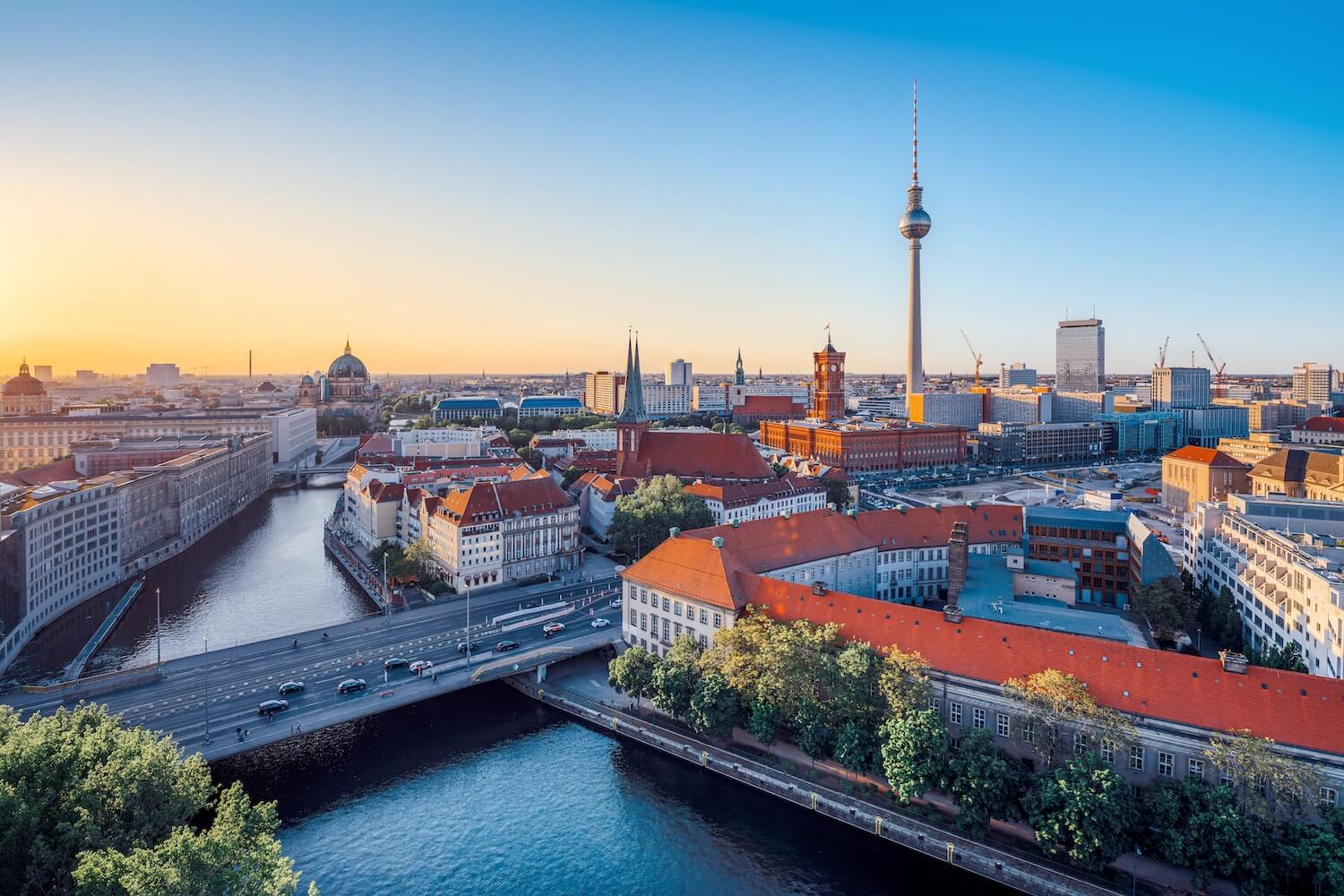
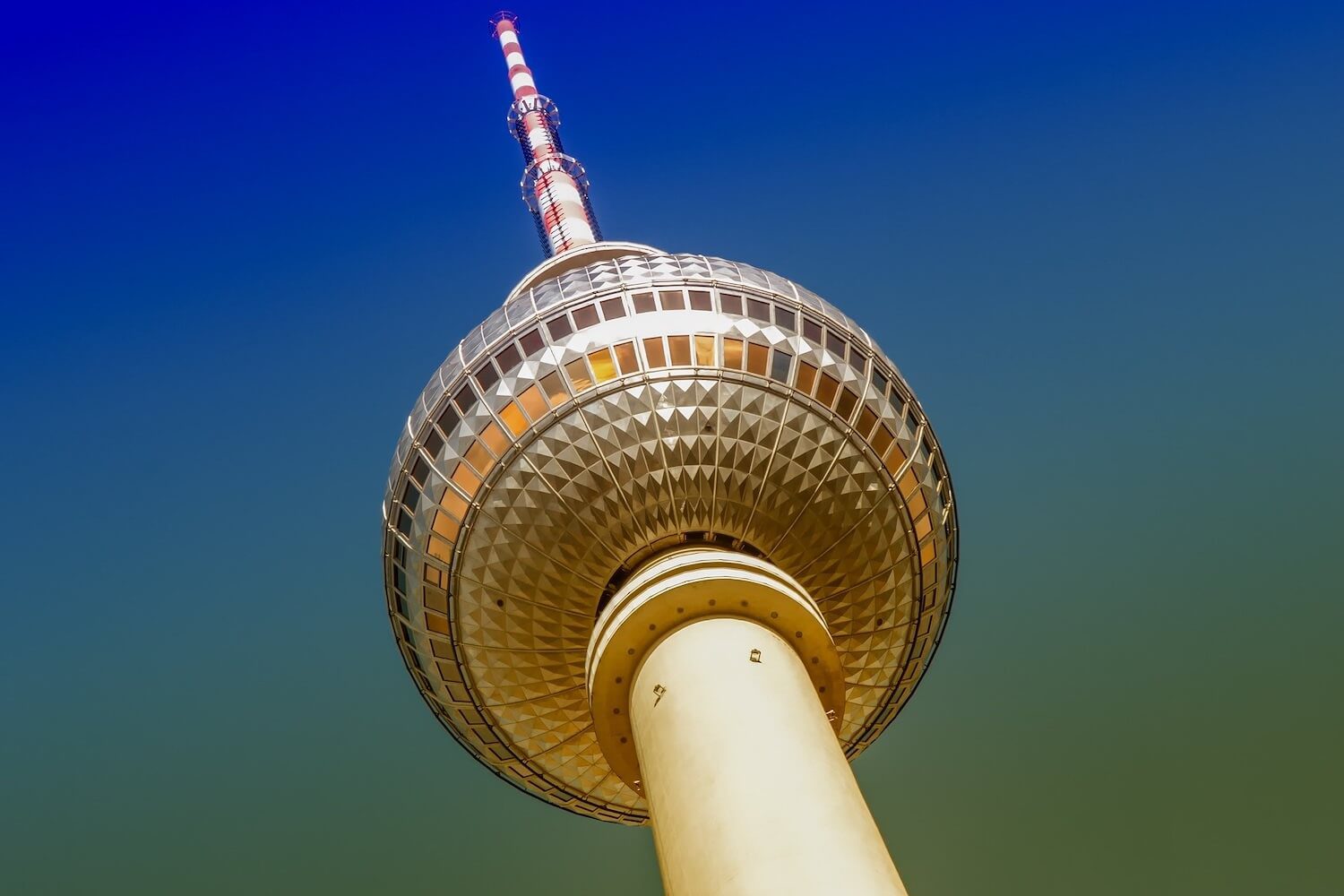
East Germany built the TV Tower on Alexanderplatz partly to broadcast television and partly to show what the socialist state could achieve. Construction began in August 1965, and the tower opened on October 3, 1969. At 368 meters, it is still the tallest structure in Germany. The original design came from the architect Hermann Henselmann, and its steel sphere was intended to recall the Soviet Sputnik satellites.
The observation deck sits 203 meters up, with a bar and a restaurant in the sphere. Tickets are tied to a time slot, there is an airport-style security check, and the tower is not accessible to wheelchair users or to visitors who cannot walk without assistance.
Reunified Berlin: rebuilding the center (since 1990)
After 1990, Berlin had to decide what to do with the gaps left by war and division. Its answers ranged from radical new architecture to faithful reconstruction, and the two buildings below show both approaches. Norman Foster’s Reichstag dome, described above, belongs to this period too.
Jewish Museum Berlin
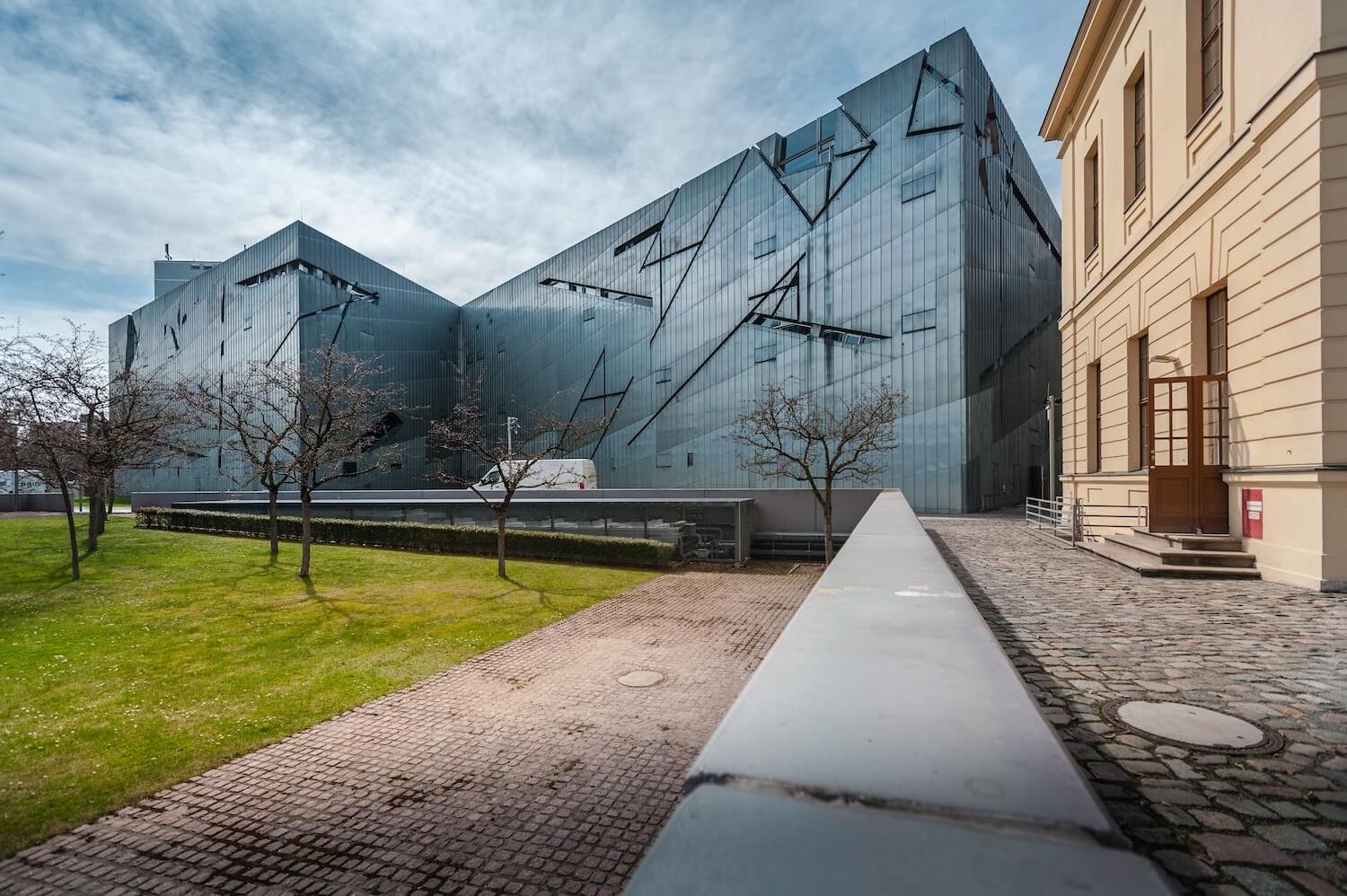
Daniel Libeskind’s design, which he called “Between the Lines,” won the competition in 1989 and was his first building to be realized. Its zigzag form is clad in titanium zinc, and the scattered slashes of its windows make it impossible to tell from outside where one floor ends and the next begins. Libeskind built it around two lines, the visible zigzag and an invisible straight line; where they cross, bare concrete “voids” cut through the building from basement to roof, to make the loss of Jewish life in the Holocaust visible as empty space. The museum notes that the building allows many interpretations: some visitors see a broken Star of David in it, others a bolt of lightning.
Underground, three axes represent exile, the Holocaust and continuity. The Axis of the Holocaust ends in the Holocaust Tower, an unheated concrete shaft lit only through a narrow slit, where many visitors describe a feeling of oppression. The Axis of Exile leads out to the Garden of Exile, 49 concrete stelae on sloping ground with Russian olive (oleaster) bushes growing on top, which the museum describes as a symbol of hope. The building opened to the public in 2001; almost 350,000 people had already toured it while it was still empty.
You enter through the adjoining baroque Old Building on Lindenstrasse in Kreuzberg. The museum is open Tuesday to Sunday and closed on Mondays, and recommends booking a time-slot ticket online. The museum’s own guide to the Libeskind building is an excellent introduction before you visit, and our article on Jewish heritage sites in Berlin suggests what to see nearby.
Humboldt Forum (the reconstructed Berlin Palace)
For centuries the Hohenzollern palace stood at the end of Unter den Linden. Its baroque form was largely the work of Andreas Schlüter. The palace was severely damaged in the Second World War, and East Germany demolished it in 1950 and later built its Palace of the Republic, opened in 1976, on part of the site. That building was itself demolished in the 2000s.
In 2002, the Bundestag approved a partial reconstruction. The Italian architect Franco Stella combined three rebuilt baroque facades, the dome and the courtyard facades of the Schlüterhof with an openly modern east side, and the building was completed in 2020. The reconstructed facades were funded by donations. Whether Berlin should have rebuilt the palace is still debated, which makes the building worth seeing for the argument alone. Its exhibitions are open from Wednesday to Monday and closed on Tuesdays.
Beyond the classic list: Berlin modernism
If architecture is your main interest, look further out. The UNESCO-listed Berlin Modernism Housing Estates, built between 1910 and 1933, show how the city tried to house ordinary people well during the Weimar Republic. The best known is the Horseshoe Estate in Britz, designed by Bruno Taut, a curved terrace of apartments around a green space that is still lived in today. These are residential neighborhoods, so visit respectfully and from the street.
A note on the Topography of Terror
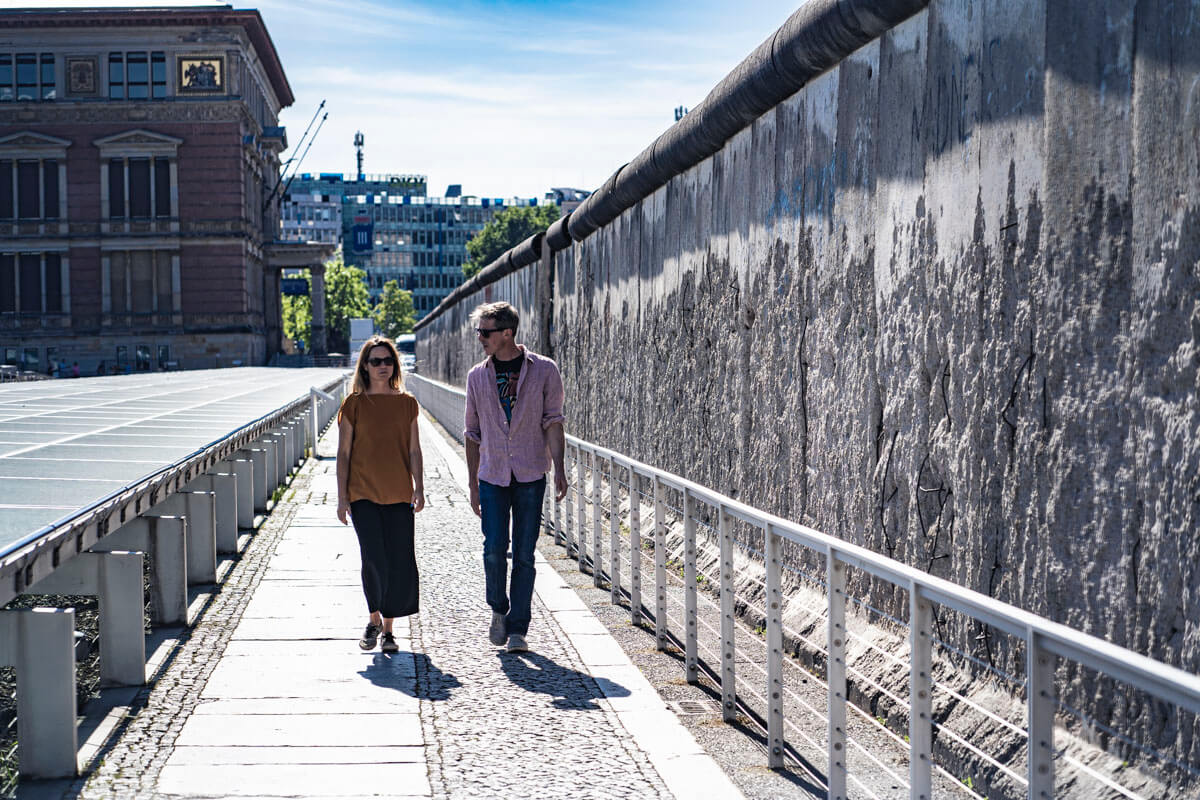
The Topography of Terror is often listed among Berlin’s famous buildings, but it is not a historic building. It stands on the site of the headquarters of the Gestapo, the SS leadership and, from 1939, the Reich Security Main Office; those buildings were damaged in the war and demolished by the mid-1950s. What you see today is a modern documentation center beside excavated cellar remains and a surviving stretch of the Berlin Wall. It is one of the most important places in the city for understanding the Nazi period, and you will find it in our guide to World War II sites in Berlin.
Day trip from Berlin: Sanssouci Palace in Potsdam
Sanssouci is not in Berlin but in Potsdam, about 40 minutes away, and it is often confused with Berlin’s palaces. It was Frederick the Great’s summer residence, a single-story palace built between 1745 and 1747 under the supervision of Georg Wenzeslaus von Knobelsdorff to the king’s own specifications. It sits at the top of terraced vineyards, and its library and concert room are counted among the finest achievements of Rococo interior design. Frederick asked to be buried on the uppermost terrace; his wish was finally carried out in 1991.
Sanssouci is part of the UNESCO World Heritage Site of the Palaces and Parks of Potsdam and Berlin. Admission to the palace is by fixed time slot, the number of tickets per day is limited, and it is closed on Mondays, so the Prussian Palaces and Gardens Foundation recommends booking ahead. To see Sanssouci with the New Palace, Cecilienhof and Potsdam’s Dutch Quarter in one day, our private Potsdam palaces and gardens tour includes hotel pick-up in Berlin and a private driver.

How to see Berlin’s famous buildings on one route
Most of these buildings line a single east–west axis in Mitte, so you can see them in one well-planned day:
- Central Berlin on foot (about 3 kilometers): the Reichstag building, the Brandenburg Gate, Unter den Linden, the Humboldt Forum, Museum Island and Berlin Cathedral, then across the Spree to the TV Tower at Alexanderplatz. Allow a full day if you go inside one museum and the dome.
- The western half: the Neue Nationalgalerie at the Kulturforum, then the Kaiser Wilhelm Memorial Church on Breitscheidplatz and Charlottenburg Palace. This works as a second day, or as an afternoon if you skip the palace interior.
- Kreuzberg: the Jewish Museum Berlin deserves at least two hours on its own.
For a timed plan that combines several of these with lunch, dinner and what to book, see our itinerary for one day in Berlin.
Seeing Berlin’s architecture with a private guide
Buildings are easier to read with someone who can explain what was built, what was destroyed and what was put back. Our Berlin’s Architectural Masterpieces private tour spends about five hours on exactly that, from the rebuilt baroque facades of the Humboldt Forum and the Neue Wache to Potsdamer Platz and Frank Gehry’s DZ Bank building, and contrasts the planning of former East and West Berlin. It includes hotel pick-up and can be done by bike or with a private vehicle and driver.
If you would rather combine architecture with the city’s main sights, our Must-See Berlin history and highlights tour is a five-hour introduction for first-time visitors. For anything else, we can plan a tailor-made tour around your interests, or you can contact our Berlin team with your dates.
Frequently asked questions about famous buildings in Berlin
The Brandenburg Gate is Berlin’s best-known landmark and the symbol of reunification. The most famous working building is the Reichstag, seat of the German parliament, whose glass dome is open to visitors who register in advance.
You can visit the Reichstag dome, Berlin Cathedral, the TV Tower, the Museum Island museums, the Neue Nationalgalerie, the Jewish Museum Berlin, the Humboldt Forum, Charlottenburg Palace and the Kaiser Wilhelm Memorial Church. The Brandenburg Gate is a monument you walk through rather than enter. Many museums close on Mondays, and the Humboldt Forum’s exhibitions close on Tuesdays.
Yes. Visiting the dome and roof terrace is free, but you must register in advance with the German Bundestag and bring official photo identification, such as a passport or national identity card. Visitors pass a security check at the entrance.
Berlin is known for Prussian Neoclassicism, seen in the Brandenburg Gate and Schinkel’s Altes Museum; the heavy historicism of the imperial era, seen in the Reichstag and Berlin Cathedral; Weimar-era modernism in its housing estates; postwar modernism in the Neue Nationalgalerie and the TV Tower; and contemporary architecture such as the Jewish Museum and the Reichstag dome.
You can see most of them from outside in one day, because the Reichstag, the Brandenburg Gate, Museum Island, Berlin Cathedral, the Humboldt Forum and the TV Tower lie on one walkable route through Mitte. Going inside more than one or two of them takes longer, and the Jewish Museum, the Neue Nationalgalerie, the Kaiser Wilhelm Memorial Church and Charlottenburg Palace are best saved for a second day.
No. Sanssouci Palace is in Potsdam, the former Prussian royal residence city next to Berlin. It is an easy day trip from the city center.